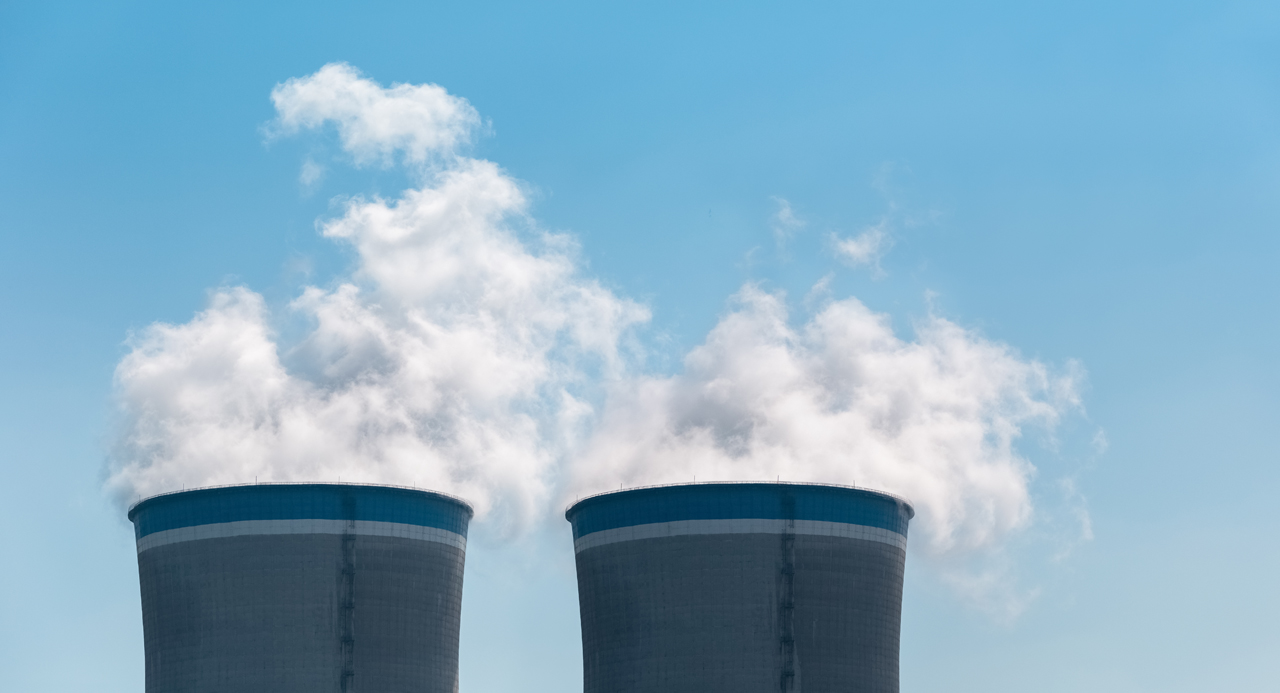
Cooling towers work hardest when a Phoenix commercial building is rejecting heat day after day through the long cooling season. By September, months of evaporation may have concentrated minerals in the circulating water and exposed weaknesses in water treatment, blowdown controls, nozzles, fill and strainers. A tower can still be running while losing performance, so the end of summer is a sensible time for a closer inspection.
Why Scale Builds Up in a Cooling Tower
Cooling towers reject heat by evaporating part of the circulating water. The water that evaporates leaves dissolved minerals behind. As this continues, calcium, magnesium, silica and other dissolved solids become more concentrated in the remaining water.
If concentration rises beyond what the treatment program can control, minerals can form scale on heat transfer surfaces, fill, piping and other components. Scale is not simply a cosmetic problem. Deposits can restrict water flow and interfere with heat transfer, forcing connected equipment to work harder.
Watch for Changes in Condenser Water Performance
Visible mineral buildup is an obvious warning sign, but it is not the only one. Facility staff may notice that condenser water temperatures are higher than expected, the chiller is operating under greater load or the tower needs more fan operation to achieve the same result.
Uneven water distribution across the fill, partially blocked spray nozzles and restricted strainers can also reduce tower performance. These symptoms do not automatically prove that scale is the cause. Fan problems, pump issues, control faults and changing building load can create similar complaints. The entire water side of the system should be evaluated before repairs are chosen.
Blowdown Controls Mineral Concentration
Blowdown removes a portion of concentrated tower water and replaces it with fresh makeup water. The relationship between mineral levels in makeup water and circulating water is commonly described as cycles of concentration.
Too little blowdown can allow dissolved solids to rise to troublesome levels. Excessive blowdown wastes water and treatment chemicals. The correct setting depends on makeup water quality, tower operation and the treatment program.
Conductivity controls are often used to manage blowdown automatically. A technician or water treatment specialist can check whether the sensor, valve and programmed limits are producing the intended result rather than simply opening the bleed valve farther.
Clean Components Without Ignoring the Cause
Cleaning visible deposits can restore airflow and water distribution, but the underlying reason for scale should still be identified. If water chemistry, blowdown or filtration is out of control, deposits may return.
A useful cooling tower inspection can include the basin, fill, spray nozzles, drift eliminators, strainers, makeup assembly, bleed controls, fan system, pump operation and accessible heat exchange surfaces. Water treatment records can also reveal whether conductivity, pH or chemical feed has been drifting from the intended range.
Do Not Adjust Water Treatment by Guesswork
Cooling tower chemistry is a balancing act. A change intended to reduce scaling can create corrosion or other problems when it is made without understanding the water and materials in the system.
Facility teams should document visible deposits, water use changes, condenser water temperatures and any recent control problems. That information gives the mechanical contractor and water treatment provider a clearer picture of what changed during the summer.
Use September to Catch Problems Before They Grow
Phoenix commercial cooling systems may continue operating well into fall, so September is not the end of the cooling season. It is simply a good point to inspect what months of heavy use have revealed. Catching poor water distribution, scale, pump problems or failing controls now can reduce the chance that the same weakness becomes a larger problem next summer.
Schedule Cooling Tower Service With Cascade Mechanical
Cascade Mechanical provides cooling tower repair and replacement, chiller service, pump repair, condenser and chilled water piping, preventative maintenance and commercial HVAC service throughout Phoenix, Tempe, Scottsdale, Mesa, Gilbert and Chandler. If your cooling tower has visible scale, rising water temperatures, poor flow or recurring maintenance problems, call 602 233 3265 for service or a free job estimate.
Live References
Cascade Mechanical Commercial HVAC Services
Cascade Mechanical Annual Chiller Maintenance
Cascade Mechanical HVAC Services In Tempe, AZ
Need commercial AC repair in Phoenix Arizona? Call Cascade Mechanical, Inc. at 602-233-3265. We offer complete commercial HVAC services like chiller tube repair cooling towers, and heat exchangers to Scottsdale, Phoenix, Mesa, Gilbert, Chandler Arizona and more!