
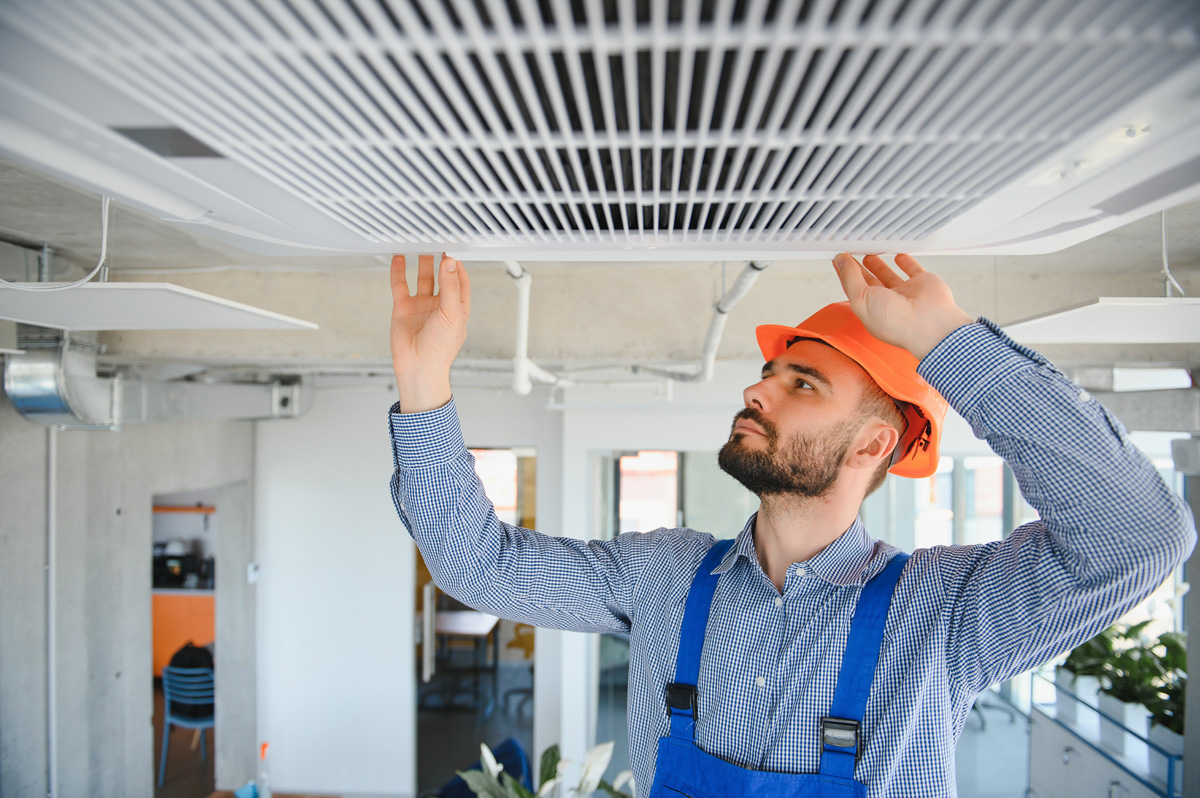
A rooftop economizer can reduce mechanical cooling when outdoor conditions are suitable. It uses dampers, sensors and controls to bring in outside air instead of relying entirely on the compressor. In Phoenix, that opportunity is usually limited to cooler mornings, nights and parts of the shoulder seasons.
The same equipment can create a serious comfort problem when it fails during August. A damper that remains open may pull extremely hot or dusty air into the building while the air conditioner struggles to keep up.
What an Economizer Is Supposed to Do
The economizer compares outdoor conditions with return air or programmed limits. When outside air can help cool the building, the controller opens the outdoor air damper and reduces compressor demand.
The system must also maintain the minimum outdoor airflow required for ventilation. That means the damper may not close completely during occupied hours. The exact position depends on the equipment, control sequence and building requirements.
A functioning economizer should change position smoothly and respond to temperature, humidity or enthalpy sensors according to its design.
Signs the Damper May Be Stuck Open
A stuck open damper can make supply air warmer than expected during the hottest part of the day. Occupants may complain that the building cools normally in the morning but falls behind by afternoon.
The rooftop unit may run for long periods, compressors may stage more often and utility use may increase. Dust can also enter more readily, leading to dirty filters, visible residue near supply registers or reduced indoor air quality.
These symptoms do not prove the economizer is responsible. Dirty coils, low refrigerant, failed fans and duct problems can create similar results. The complete unit needs to be tested.
A Stuck Closed Economizer Also Causes Problems
An economizer that never opens may not create an immediate August comfort complaint. The compressors can still cool the building, but the property loses the chance to use cooler outdoor air when conditions improve.
A closed or poorly positioned damper can also affect ventilation. Building operators may notice stale air, odors or rising carbon dioxide readings in occupied areas. Those signs require careful evaluation because ventilation concerns may involve schedules, controls, fans or building use as well as the economizer.
Sensors and Actuators Can Fail
The damper depends on an actuator and control signals. A failed motor, loose linkage or damaged blade can prevent movement. Temperature and humidity sensors may drift, become dirty or send incorrect information to the controller.
Control settings can also be wrong after equipment replacement, electrical work or programming changes. A unit may appear mechanically sound while operating under an unsuitable lockout temperature or minimum damper position.
Commercial HVAC technicians can compare sensor readings, commanded position and actual damper movement to locate the fault.
Phoenix Dust and Monsoon Weather Matter
Rooftop equipment is exposed to dust, wind and sudden monsoon conditions. Debris can collect around dampers and screens, while dirty sensors may respond poorly. Water intrusion, corrosion or damaged wiring can create intermittent problems that appear only under certain conditions.
Filters may load faster when an economizer is drawing more outside air. Regular inspection is particularly important after a dust storm or when the building suddenly develops airflow or comfort complaints.
Do Not Adjust the Damper by Guesswork
Closing an outdoor air damper may seem like a quick solution when the building is hot. However, incorrect adjustment can reduce required ventilation or interfere with the control sequence.
Property staff should record the time, outdoor conditions, thermostat readings and affected zones. Note whether the problem changes when the building opens, when occupancy rises or when the afternoon heat arrives. That information helps the technician diagnose the system without relying on a single snapshot.
Schedule Commercial Economizer Service With Cascade Mechanical
Cascade Mechanical provides commercial rooftop HVAC repair, controls troubleshooting, preventative maintenance, chiller service, cooling tower repair and related mechanical work throughout Phoenix, Tempe, Scottsdale, Mesa, Gilbert and Chandler. If an economizer is bringing in hot air, failing to move or contributing to uneven cooling, call 602-233-3265 for service or a free job estimate.
References
Cascade Mechanical: Commercial HVAC Services
Cascade Mechanical: What Is an Economizer in HVAC?
Cascade Mechanical: Why Choose Cascade Mechanical?
United States Department of Energy: HVAC Retrofits and Economizers
Carrier University: Troubleshooting Single Zone Rooftop Units
Cascade Mechanical HVAC Services In Tempe, AZ
Need commercial AC repair in Phoenix Arizona? Call Cascade Mechanical, Inc. at 602-233-3265. We offer complete commercial HVAC services like chiller tube repair cooling towers, and heat exchangers to Scottsdale, Phoenix, Mesa, Gilbert, Chandler Arizona and more!